Your developer has left
You need someone to understand the existing system, take over responsibly, and keep it moving.

Long-term technical partnership
More than developers who implement tickets. We take ownership of your application's technical challenges, identify risks, recommend solutions, and help you make engineering decisions that serve your business.
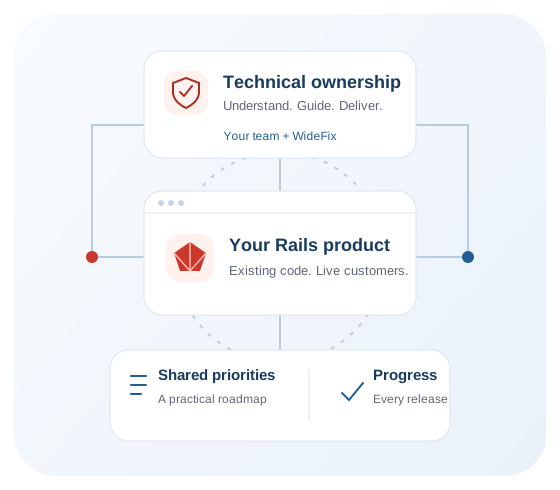
A shared roadmap. An accountable technical partner.
Challenges we help solve
Whether your Rails application needs a new technical owner or an experienced partner alongside your team, we work with what you already have.
You need someone to understand the existing system, take over responsibly, and keep it moving.
Every change feels risky, and the backlog keeps growing.
Performance issues, failed jobs, and unreliable deployments demand attention.
You need someone who can evaluate options and help decide what matters most.
What partnership means to us
Good engineering starts with understanding the problem, not simply following instructions. We combine hands-on Rails expertise with judgment and clear communication.
We stay accountable for engineering outcomes, not just completed tickets.
We investigate root causes, explain alternatives, and recommend practical next steps.
We surface progress, blockers, risks, and trade-offs before they become surprises.
We prioritize the work that matters to your customers and business, without unnecessary rewrites.
We make incremental improvements to reliability, maintainability, performance, and delivery.
A practical working relationship
We can start with an urgent production issue, a focused improvement, or a longer-term engagement. The process adapts to what your application needs.
Step 1
Learn your product, codebase, business goals, and immediate concerns.
Step 2
Identify technical risks, constraints, and opportunities for improvement.
Step 3
Agree on what needs attention now and what can wait.
Step 4
Fix issues, maintain production, modernize safely, and ship useful features.
Step 5
Revisit priorities and strengthen the application as your needs evolve.
Relevant experience
Our work spans Rails maintenance, performance, infrastructure, integrations, and gradual modernization. Here are examples from our existing case studies.
A practical example of investigating bottlenecks and restoring dependable background processing.
Read the case studyEvolving an existing application while protecting the product already in use.
Read the case studyImproving consistency in a business-critical payment integration.
Read the case studyExplore our services, meet the team, or browse more client work.
Fractional CTO support
For founders who need technical direction without a full-time CTO, Andrei Kaleshka leads the relationship: reviewing the existing application, discussing architecture choices, coordinating delivery and contributing hands-on engineering. We agree his involvement, decision responsibilities and availability around your product.
Turn business goals into a sequenced technical roadmap. Record architecture choices, risks and alternatives so you can decide what to build, maintain or modernize next.
Clarify ownership across your developers, WideFix engineers and outside specialists. Align interfaces, unblock dependencies and review delivery priorities.
Compare implementation scope, infrastructure costs and staffing options. Agree spending limits and review progress, while keeping leadership connected to code reviews and hands-on changes.
A typical starting scope is an application assessment, a prioritized roadmap and a recurring decision and delivery review. Ongoing leadership and implementation capacity are agreed separately.
At Worship Online, we coordinated specialist expertise around ongoing maintenance, product work and the budget. For Palladium, we coordinated API delivery across teams while protecting the existing portal.
Your application. A clear next step.
Tell us where the project stands today. We'll help identify the risks, priorities and a practical way to take it over.
