

MEZUKA / MVP DEVELOPMENT + TECHNICAL LEADERSHIP
A food delivery MVP built from scratch
From business requirements to a working minimum viable product (MVP), integrated restaurant workflows and a team of 10 developers.
Built December 2014–June 2016. The product did not launch because of a market-fit mismatch.
THE PRODUCT
From startup requirements to a working food-ordering MVP
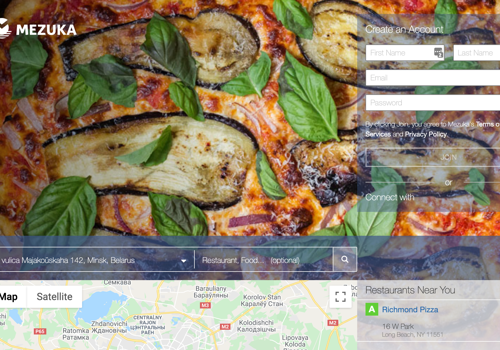
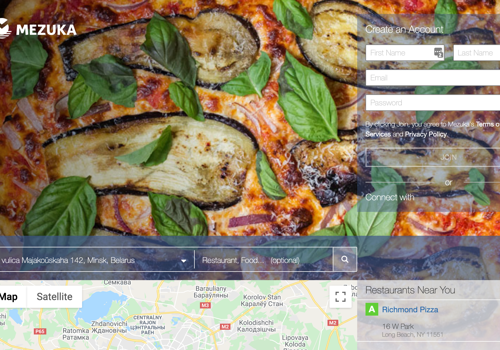
Mezuka was a startup building a minimum viable product (MVP) for an online food-ordering and delivery platform. Customers could find restaurants and customize dishes such as pizzas, burgers and hot dogs. WideFix founder Andrei Kaleshka built the application from scratch and led its technical development between December 2014 and June 2016.
The platform needed to connect customer ordering with restaurant operations: searchable delivery areas, customizable dishes, online payments, invoices and automated order communication. Building those capabilities required coordinating product requirements, integrations and infrastructure.
THE WORK DELIVERED
Own the application from requirements to implementation
- 01
Product and team ownership
As CTO and engineering team lead, Andrei analyzed business requirements, made architecture and deployment decisions, planned delivery, reviewed code and built a team of 10 developers. He established the development workflow alongside hands-on implementation.
- 02
An ambitious homepage for a 2014–2016 MVP
The homepage brought together several demanding features for an MVP built in 2014–2016: a map of stores, Elasticsearch full-text search scoped to ZIP-code areas, and visual highlighting of those areas on the map, including on mouseover. Customers could see which area they were searching.
The application identified the customer’s location and loaded the relevant stores, helping customers find restaurants serving their area.
In the backoffice, uploading a store’s hero background image automatically generated a distinct UI color palette for that store. Store teams could give their storefront a coordinated appearance through a single image upload.
- 03
Ordering, payments and restaurant integrations
Built order management and invoicing and integrated Authorize.net payments. Twilio automated phone calls, and an eFax integration delivered orders by fax, connecting customer orders with restaurant operations.
- 04
Deployment, testing and application architecture
Configured automated deployment and SSL, wrote unit and end-to-end tests, and completed the server PCI compliance process requested by Visa. As the product evolved, refactored its server-rendered interface into a single-page application.
PRODUCT DESIGN
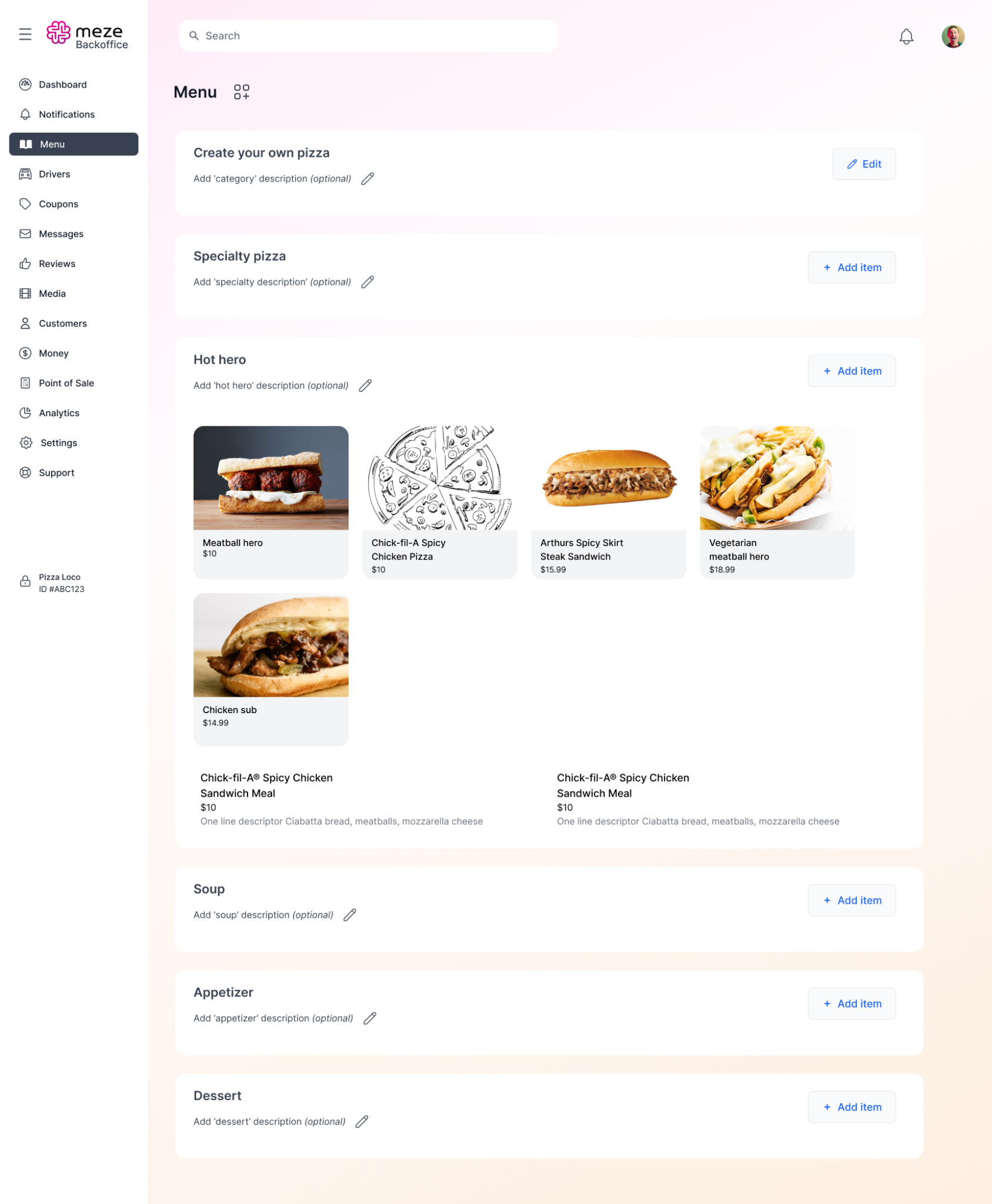
A backoffice for restaurant menus
The supplied backoffice design shows menu categories, dishes and pricing. It is presented as a design artifact, rather than evidence of a live restaurant deployment.
OPEN SOURCE
Tools built and dependencies fixed along the way
Building Mezuka meant taking ownership of the supporting tools, too. We created reusable Ruby libraries, fixed issues in our dependencies through Mezuka forks, and shared our experience.
Tools we built
Dependencies we fixed
DELIVERY AND COMMERCIAL OUTCOME
A working MVP with an unlaunched business
The engineering work produced a working MVP, integrated ordering workflows and an established development team. Mezuka did not go live because of a market-fit mismatch. This case study documents product development and technical leadership; it does not claim commercial traction, customer growth or production reliability.
LESSONS LEARNED
Strong technology is only part of a successful business
Mezuka reinforced a lasting lesson for us: even strong engineering and a working product with complex features are not enough to establish a successful, profitable business. Technical delivery and commercial success are different milestones.
A business also needs product-market fit, a clear business strategy, marketing, sales and effective communication with customers, partners and the team. Those efforts need to develop alongside the product; adding more features cannot substitute for understanding demand and finding a viable way to reach and serve customers.
For founders and application owners, the practical lesson is to validate demand early, test how customers will discover and buy the offering, and keep product priorities connected to what those conversations reveal. Engineering should support that business strategy, with clear communication between the people building the product and those bringing it to market.
FOUNDER REVIEW + PROJECT PORTFOLIO
Read more about Mezuka on Clutch
BUILD WITH MAINTENANCE IN MIND
Planning a new Rails application?
We also build applications from scratch. Our experience maintaining existing Rails products informs architecture, automated testing, integrations and deployment decisions from the start, giving future developers a clearer foundation to work with.
Discuss your application